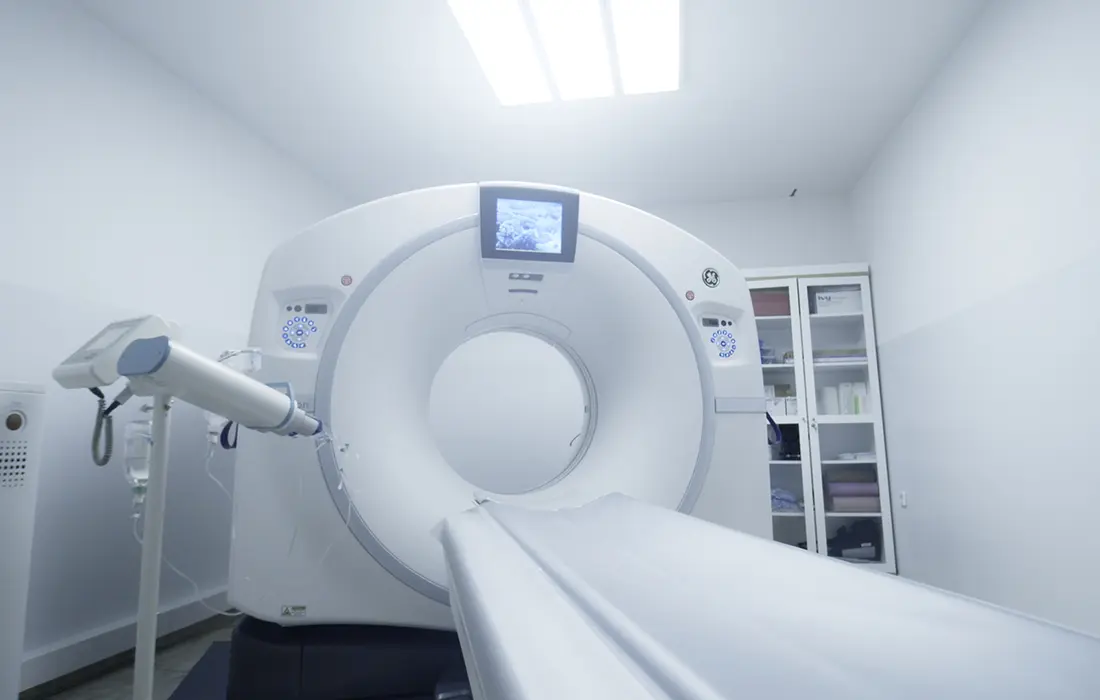
Ultrasound in pregnancy
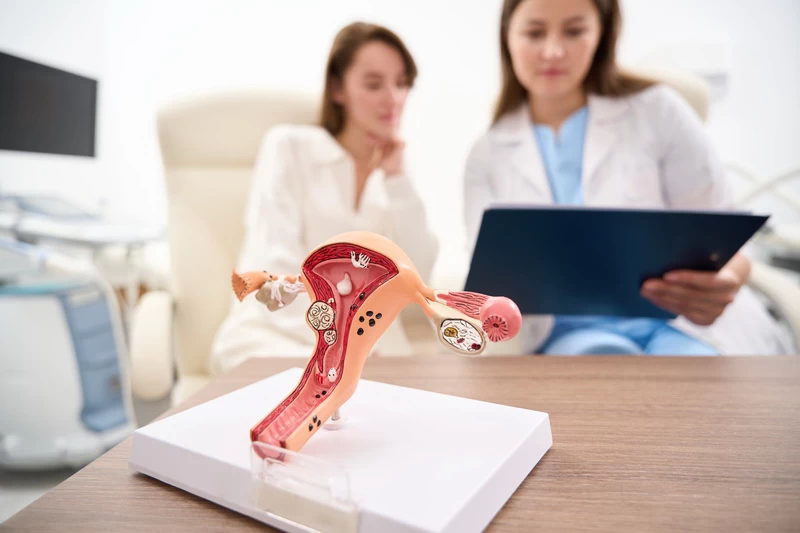

Ultrasound is one of the most important diagnostic tools in modern gynecology and obstetrics. Thanks to its non-invasiveness and accessibility, ultrasound examination has become an indispensable part of prenatal care, providing valuable information about the health of the mother and fetus.
First ultrasound examination in early pregnancy
After a missed period and a positive pregnancy test, the first ultrasound examination opens the door to a new chapter – it confirms the beginning of pregnancy and provides insight into its development. In the case of a normal finding, the uterus shows a gestational sac, yolk sac, and fetal cardiac activity.
As this is the first examination, some women are then faced with a diagnosis of multiple pregnancy (twins or, more rarely, triplets). In that case, the ultrasound shows two or more separate heartbeats.
We then measure the CRL (crown-rump length), that is, the length of the fetus from the top of the head to the buttocks. This measurement enables the most accurate assessment of gestational age and determination of the estimated due date, which remains fixed regardless of later changes in fetal growth.
In addition to confirming a normal pregnancy, an ultrasound examination can reveal various pathological conditions. For example, it is possible to diagnose an empty gestational sac (“blighted ovum”) or a gestational sac in which the fetus has no cardiac activity (missed miscarriage). These ultrasound diagnoses allow early detection of spontaneous miscarriage before symptoms such as bleeding and pains appear.
One of the most serious complications that the first ultrasound examination can detect is ectopic pregnancy – a condition in which the pregnancy implants outside the uterine cavity, most often in the fallopian tube. If the pregnancy test is positive and the gynecologist sees an empty uterus, there is always suspicion of an ectopic pregnancy. A timely diagnosis enables rapid medical intervention, thereby reducing the risk of serious complications, including fallopian tube rupture and massive internal bleeding that may endanger the mother’s life.
Therefore, we can conclude that the first ultrasound examination is not only confirmation of pregnancy but also a key diagnostic tool that can detect potential risks in a timely manner, thereby increasing the safety of both mother and child.
Mini Anomaly Scan
The second important ultrasound examination in pregnancy is the mini anomaly scan, which is performed between the 11th and 14th week of pregnancy. This examination plays a key role in the early assessment of fetal development, enabling detailed analysis of biometric parameters and ultrasound markers of chromosomal anomalies.
During the examination, fetal biometry is measured, including crown-rump length (CRL), head diameter and circumference (BPD, HC), abdominal circumference (AC), and femur and humerus length (FL, HL). These values help compare fetal growth with expected norms.
In addition to biometric measurements, the presence of ultrasound markers of hereditary paines is monitored. Among the most important is nuchal translucency (NT), that is, a small accumulation of fluid in the fetal neck region, whose increased value may indicate an elevated risk of chromosomal disorders. The nasal bone is also visualized, and its absence may be associated with certain genetic syndromes. In addition, vascular marker are analyzed, which further contribute to the assessment of a chromosomally normal fetus.
The accuracy of prenatal diagnostics is impainved if, in addition to the ultrasound examination, we perform combined screening (by measuring hormones in the mother’s blood and NT on ultrasound, taking the mother’s age into calculation), and even greater precision is provided by non-invasive prenatal tests (NIPT) such as NIFTY, Qualified, Veritas myPrenatal, and similar ones.
In addition to detecting chromosomal disorders, the mini anomaly scan enables early detection of structural malformations, such as spina bifida and omphalocele, making it a key part of early screening for fetal anomalies. Timely recognition of abnormalities provides valuable information about fetal health and enables early planning of further diagnostic procedures.
Anomaly scan
The Anomaly scan is performed between the 20th and 22nd week of pregnancy and represents a detailed morphological assessment of the fetus. In addition to measuring fetal biometry, as with the mini anomaly scan, this examination enables systematic analysis of all organs and organ systems.
3D and 4D ultrasound techniques play a major role in more precise diagnostics. Although 4D ultrasound is often equated with displaying the fetal face, its true value lies in the ability to visualize structures that are not clearly visible on conventional 2D ultrasound. It is especially important in the diagnosis of malformations; in addition to facilitating interpretation for physicians, it also enables parents to gain a pain understanding of the findings.
During the anomaly scan, the amount of amniotic fluid is also assessed, the structure and position of the placenta are analyzed, as well as umbilical cord insertion (the place where the umbilical cord enters the placenta). Cervicometry measures cervical length and assesses the appearance of the internal os, which is important in the prevention of preterm birth. Doppler analysis always evaluates flow in the umbilical artery, which provides insight into placental function and the fetus’s supply of oxygen and nutrients.
Ultrasound in the third trimester
In the third trimester, the ultrasound examination plays a key role in monitoring fetal growth and development, with an emphasis on growth rate and the general condition of the fetus. By measuring biometric parameters (BPD, HC, AC, FL, HL), fetal weight gain is assessed, making it possible to identify any deviation from the expected growth dynamics.
In most cases, fetal growth proceeds normally, but ultrasound can reveal a slowed fetal growth rate, which requires more frequent ultrasound measurements to assess further progression. In such situations, a smaller amount of amniotic fluid (oligohydramnios) is often observed, which may indicate impaired placental function. Doppler measurement monitors fetal oxygenation, most commonly by analyzing flow in the umbilical artery (AU) and the middle cerebral artery (ACM).
On the other hand, it is possible to determine an accelerated fetal growth rate, which may be genetically determined or the consequence of pathological pregnancy conditions, such as gestational diabetes. In such cases, cervicometry is of particular importance, since a larger fetus and an increased amount of amniotic fluid (polyhydramnios) may increase the risk of preterm birth and delivery of an immature child.
In addition to monitoring development, ultrasound in this period also serves for orientation regarding the position and presentation of the fetus. The most common presentation is cephalic, which is optimal when planning a vaginal birth.
Today, pregnancy monitoring without ultrasound is unimaginable. In addition to ensuring medical control and timely diagnostics, ultrasound examinations also represent an emotionally important moment for pregnant women and their families. Expectant mothers often come accompanied by their partners and children, enabling them to develop a special bond with the upcoming new family member already during pregnancy.
(Written by mr. sci. dr. Beata Gebauer Vuković, specialist in gynecology and obstetrics, sub-specialist in fetal medicine, for maminosunce.hr)
Excerpt from the price list:
| Ginekologija i porodništvo | |
| Klasični ginekološki pregledi | |
| Ginekološki pregled + Transvaginalni ultrazvuk (TV UZV) + Color Doppler | 90.00 € |
| Ginekološki pregled + TV UZV + Color Doppler + PAPA (standardni) | 110.00 € |
| Ginekološki pregled + TV UZV + Color Doppler + PAPA (LBC tekućinska citologija) | 130.00 € |
| Ginekološki pregled + TV UZV + Color Doppler+ HPV tipizacija | 210.00 € |
| Transvaginalni ultrazvuk (TV UZV) | 70.00 € |
| Transvaginalni ultrazvuk + Color Doppler | 80.00 € |
| PAPA razmaz + stupanj čistoće | 40.00 € |
| PAPA test - tekućinska citologija (LBC Sure Path) | 60.00 € |
| Anti-D imunoglobulin | 100.00 € |
| MR zdjelice | 250.00 € |
| MSCT abdomen sa zdjelicom s kontrastom | 300.00 € |
| Cjepljenje protiv HPV virusa | 140.00 € |
| Trudnički pregledi i ultrazvuci | |
| Test na trudnoću iz urina | 15.00 € |
| Trudnički UZV rana gestacija | 80.00 € |
| Trudnički UZV rana gestacija gemini | 100.00 € |
| Rani kombinirani probir | 150.00 € |
| Trudnički pregled, 3/4D UZV, Color Doppler u trudnoći | 120.00 € |
| Trudnički pregled, 3/4D UZV, Color Doppler u trudnoći (gemini) | 150.00 € |
| Trudnički ultrazvuk | 80.00 € |
| Mini Anomaly Scan | 110.00 € |
| Mini Anomaly Scan (blizanci) | 140.00 € |
| Mini Anomaly Scan uz NIPT testove | 100.00 € |
| Anomaly Scan | 120.00 € |
| Color Doppler u trudnoći | 50.00 € |
| Color Doppler u trudnoći + CTG | 60.00 € |
| CTG | 40.00 € |
| Uzimanje cervikalnih briseva - postupak | 35.00 € |
| Ekspertiza/drugo mišljenje u trudnoći | 150.00 € |
| Trudnice koje vode trudnoću u poliklinici | |
| Trudnički pregled, 3/4D UZV, Color Doppler u trudnoći | 100.00 € |
| Trudnički pregled stalnih pacijentica + 3/4D UZV + Color Doppler + CTG nakon 35. tj. trudnoće | 70.00 € |
| Trudnički pregled, 3/4D UZV, Color Doppler u trudnoći (blizanci) | 120.00 € |
| Mini anomaly scan | 100.00 € |
| Konzultacije | 40.00 € |
| Ginekološka ambulanta | |
| Mikrobiološke ginekološke pretrage | |
| Bris cerviksa na anaerobe + kvasnice | 40.00 € |
| Bris cerviksa na anaerobe | 30.00 € |
| Bris cerviksa na anaerobe/anaerobe/kvasnice | 50.00 € |
| Bris cerviksa na kvasnice | 30.00 € |
| Bris cerviksa - BHSB probir | 30.00 € |
| Bris cerviksa - kultura Ureaplasma i Mycoplasma | 30.00 € |
| Bris cerviksa - PCR Ureaplasma i Mycoplasma | 60.00 € |
| Bris cerviksa - PCR Clamydia trachomatis | 50.00 € |
| Bris cerviksa - PCR Mycoplasma hominis /genitalium/ | 50.00 € |
| Bris cerviksa - PCR Ureaplasma urealyticum/parvum | 50.00 € |
| Bris cerviksa - PCR panel STD prošireni | 100.00 € |
| Bris cerviksa - PCR genitalni ulkus panel | 100.00 € |
| Bris cerviksa - PCR bakterijska vaginoza panel + kvasnice | 100.00 € |
| Bris cerviksa - PCR 2 panela /anaerobi/kvasnice gratis/ | 180.00 € |
| Bris cerviksa na HPV 28 tipova HR i 14 LR | 70.00 € |
| Bris cerviksa - PCR 3 panela /anaerobi/kvasnice gratis/ | 220.00 € |
| Bris cerviksa - PCR 3 panela + HPV 28 HR /anaerobi/kvasnice gratis/ | 250.00 € |
| Urinokultura i antibiogram | 55.00 € |
| AmniSure Test- | 55.00 € |
| Anaerobi + Anaerobi | 45.00 € |
| Prenatalni testovi: | |
 |
 |
 |
 |
 |
NIFTY by Geneplanet |