Service categories
Service categories:
EMNG handle

EMNG searches
What is electromyoneurography of the hands (EMNG)?
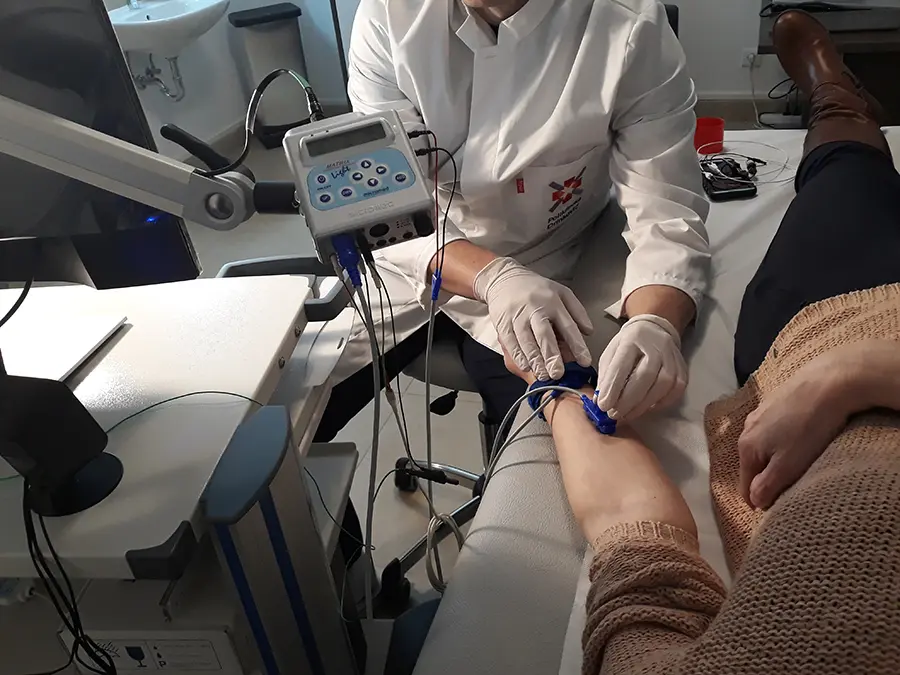
Electromyoneurography (EMNG) is a diagnostic procedure used to assess the peripheral nervous system, including the activity of muscles and the nerves that control them; more precisely, the electrical activity of muscles and nerves is examined and recorded. An EMNG test can provide your doctor with specific information about the extent of nerve and/or muscle injury, and it can also determine the exact location of the injury and give some indication as to whether the damage is reversible. An EMNG examination consists of nerve conduction testing (electroneurography) and muscle testing (electromyography).
When is EMNG of the extremities used?
EMNG is used to assess muscle and nerve activity in the diagnosis of herniated intervertebral discs, nerve injuries, in conditions affecting nerves and leading to their dysfunction, and in the diagnosis of spinal cord conditions.
What can you expect during EMNG?
The doctor or technician places surface electrodes on various spots on the skin of your hand or thin needles into the muscles, depending on where you have symptoms. The electrodes will sometimes deliver a small electrical pulse that may be felt as a twitch or cramp. Doctors will assess whether there is any spontaneous electrical activity when the muscle is at rest and the degree of activity when the muscle is under load, i.e. contracted. An EMNG examination usually lasts from 30 to 90 minutes, depending on the area being examined.
What happens after EMNG?
Temporary, minor bruising may occur where the electrode was placed. The bruises should fade within a few days. If the bruise continues to persist, contact your primary healthcare physician.
How should you prepare for an EMNG examination?
Be sure to bring all medical documentation (medical history) related to the examination you are having. Inform the doctor performing the EMNG if you have a pacemaker or any other electrical medical device inside you, if you use blood-thinning medication, or if you have hemophilia or a clotting disorder. Shower before the examination to remove oils from the skin. Do not apply lotions or creams before the test. If additional instructions are needed, you will receive them when scheduling the appointment.
Excerpt from the price list:
| Neurološki specijalsitički pregled | 90.00 € |
| Kontrolni specijalistički pregled | 65.00 € |
| EMNG ruku | 90.00 € |
| EMNG noge + ruke | 160.00 € |
| EMNG nogu | 90.00 € |
| EEG | 60.00 € |
| MR mozga | 220.00 € |
| MR vratne kralježnice | 210.00 € |
| Doppler krvnih žila vrata | 85.00 € |
| Doppler krvnih žila vrata i VB sliva | 100.00 € |