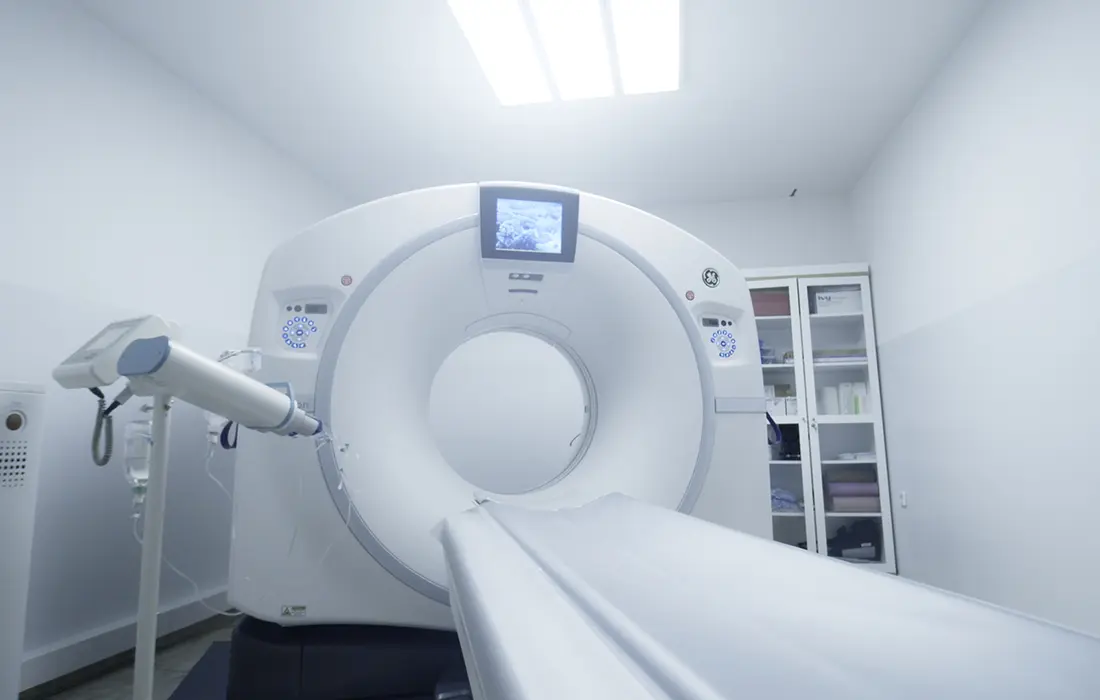
Breast Examination Guidelines


Did you know that breast cancer is the most common single cause of death among women aged 35 to 69?
In the early stages, breast cancer shows no symptoms, but there are changes that should be monitored. Every woman’s breasts are different and naturally change, so the symptoms of the disease are also different for everyone.
Below we bring you guidelines for breast examination:
Patients at average risk for developing breast cancer
- Breast self-examination is recommended for women up to 40 years of age
- From 30 to 40 years of age, a breast ultrasound (US) examination is recommended
- You should have an initial mammography (with tomosynthesis) at the age of 40 and then continue with examinations depending on the density of the glandular breast parenchyma and family history
The abbreviation ACR A, B, C, D indicates breast density:
ACR A – indicates that the breast is almost entirely composed of fatty tissue (up to 25% density).
ACR B – indicates that there are dense zones (up to 50% density)
ACR C – indicates that there are density zones from 51 to 75%. On average, 4 out of 10 women have such a finding. A
ACR D (extremely dense) – indicates that almost all breast tissue is dense (> 75%)
Based on the above breast density categories, the following is recommended:
- women who have ACR* density A and B → mammography should be performed once a year (possibly once every two years until the age of 50)
- women who have ACR* density C and D → breast ultrasound or ABUS (depending on availability) as a supplement to mammography
- Mammography (with tomosynthesis) annually from the age of 50
- From the age of 50, with ACR density C and D, breast ultrasound or ABUS (depending on availability) as a supplement to mammography
Patients at increased risk for developing breast cancer:
- ≥20% lifetime risk for ca. according to the Gail model
- breast cancer in the first-degree family line (mother, sister, daughter)
- Patients with a known genetic predisposition (BRCA 1 and 2 mutations, mutations of other oncogenes in genomic analysis, Li-Fraumeni syndrome and Cowden syndrome)
- Positive personal history of ADH (atypical ductal hyperplasia) or LIN (atypical lobular hyperplasia)
- Radiation to the thoracic area before the age of 30
Breast ultrasound is recommended once a year until the age of 30!
After the age of 30, breast MRI and breast ultrasound once a year (alternating every six months).
After the age of 40, mammography (with tomosynthesis) and breast MRI once a year (alternating every six months)
For symptomatic patients, the examination recommendation is:
Have the first examination within 10-14 days if you have noticed:
- A hard and painless lump in the breast area or armpit
- Unilateral breast swelling, redness and swelling of the skin
- Breast skin dimpling or retraction “like orange peel”
- Reduction in breast volume
- Spontaneous nipple discharge
- Nipple changes, retraction, redness or crust formation
Up to the age of 35, breast ultrasound → further work-up or follow-up
After the age of 35, mammography (with tomosynthesis) and ultrasound examination → further work-up or follow-up
Recommendation for patients operated on due to invasive breast cancer:
- Quadrantectomy, segmentectomy, SNSM (skin and nipple-areola complex sparing mastectomy) and patients with the other breast not operated on
mammography (with tomosynthesis) and breast MRI once a year (alternating every six months) - ACR density C and D → breast ultrasound as a supplement to mammography
- SSM (Skin-sparing mastectomy), DIEP (pronounced like deep), TRAM (transverse rectus abdominis)
mammography (with tomosynthesis) and breast MRI once a year (alternating every six months) - Mastectomy
Clinical examination -> targeted ultrasound of the thoracic wall
Indications for breast MRI:
- screening of patients at high risk of developing breast cancer according to the Gail model (≥20%)
- during NAT (neoadjuvant chemotherapy)
- in metastatic breast cancer of unknown primary site
- discrepancy between radiological and/or pathohistological findings
- implant imaging (without contrast)
- other → depending on findings (mammography, ultrasound, tumor PHD) and clinical picture
- preoperatively in invasive breast cancer (lobular carcinoma and breasts with dense glandular parenchyma)
- preoperatively in DCIS
- BIRADS3 lesions
- suspicion of local recurrence within one year after surgery
Guidelines taken from the website of the Croatian Society of Radiologists http://www.radiology.org/preporuka/guidelines-for-breast-examination/
Excerpt from the price list:
| 3D tomosinteza (digitalna mamografija) | 100.00 € |
| Citološka obrada | 90.00 € |
| Galaktografija | 170.00 € |
| Kontrastna mamografija | 170.00 € |
| Mamografija + biopsija (stereotaksija) | 450.00 € |
| MR dojke + biopsija dojke vođena MR-om | 700.00 € |
| MR dojke s kontrastom + UZV | 330.00 € |
| Označavanje tumora pod UZV-om ili mamografijom | 250.00 € |
| Ultrazvuk (UZV) i pregled dojke | 95.00 € |
| UZV + 3D mamografija | 170.00 € |
| UZV + uzimanje citološkog uzorka vođenog UZV-om+ citološka obrada | 170.00 € |
| UZV-om vođena biopsija+ PHD analiza | 300.00 € |