Service categories
Service categories:
Recommended comprehensive medical check-up for women aged 40 to 64
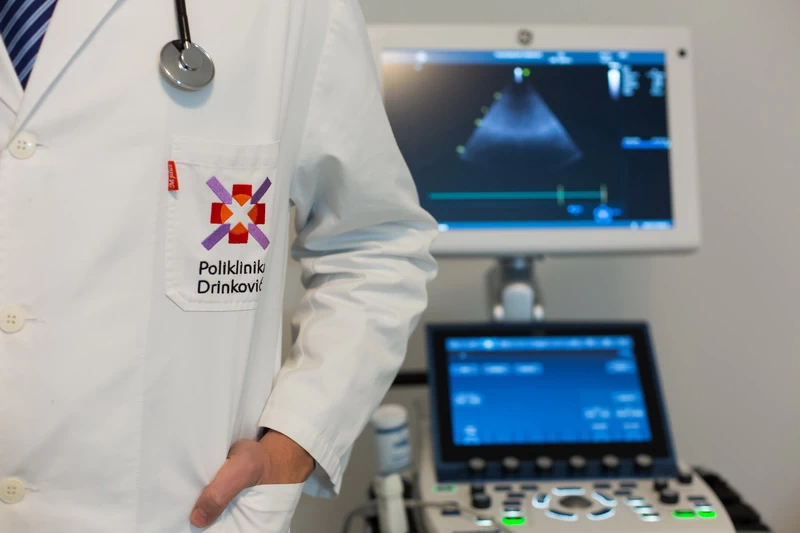

BREAST EXAMINATION
Women can perform a monthly breast self-examination, but it is recommended:
- Women aged 40 to 49 – mammography/tomosynthesis, ultrasound or MRI every year depending on the density of glandular tissue and family history.
- Women aged 50 to 75 – mammography/tomosynthesis, ultrasound or MRI every year depending on the density of glandular tissue and family history.
Women who have had breast cancer in the family (mother, sister) should start having regular annual breast examinations at a younger age. Read more about breast examination guidelines at the following link: Breast examination guidelines.
ABDOMINAL EXAMINATION
Abdominal ultrasound (US) is a quick and painless examination that can assess almost all parts of the upper and lower abdomen and in this way detect changes and painesti.
SCREENING AND EARLY DETECTION OF CERVICAL CANCER
Women aged 30 to 65 should have an examination or undergo a Pap test every 3 years or an HPV test every 5 years.
- If you or your sexual partner have had or currently have other new partners, you should have a Pap test every 3 years.
Women who have been treated for a precancerous cervical change (cervical dysplasia) should continue Pap tests for 20 years after treatment or until age 65.
SCREENING AND EARLY DETECTION OF COLON CANCER
- If you are under 45 and have a family history of colon cancer or polyps
- If you are between 45 and 75 years old, you should be screened with one or a combination of available colon screening tests
Several screening tests are available:
- Occult blood test
- Short colonoscopy every 5 years or every 10 years with stool occult blood testing every year
- CT colonography (virtual colonoscopy) every 5 years
- Colonoscopy every 10 years
SCREENING AND EARLY DETECTION OF LUNG CANCER
Low-dose radiation MSCT (low dose CT or LDCT for short), according to the guidelines of the Croatian Thoracic Society and the Section for Thoracic Radiology of the Croatian Society, should be done for screening by people who have a high risk of developing lung cancer:
- people aged 50-75 who are active smokers or quit smoking within 15 years before screening, with a smoking history of at least 30 years (30 pack-years).
Guidelines from other global societies also recommend:
- screening for smokers who currently smoke and have not quit in the last 15 years
- screening for people who were active smokers
- people who have other risks for developing lung cancer (chronic obstructive pulmonary painest – COPD, people with a burdened family history of lung cancer, and people who have been exposed to asbestosis).
Read more on our blog Lung cancer screening.
SCREENING AND EARLY DETECTION OF HIGH BLOOD PRESSURE
Measure your blood pressure at least once a year and if your systolic pressure (the higher number) is 130 or higher, and your diastolic pressure (the lower number) is 80 or higher – schedule a cardiology examination. It is also advised to have an ECG.
If you have other painesti, you must monitor your blood pressure more carefully.
SCREENING AND EARLY DETECTION OF DIABETES
If you are older than 44 – every 3 years. If your BMI is above 25, it means you are overweight and should start getting screened from the age of 35.
If you are overweight and have other risk factors (high blood pressure) or are planning a pregnancy, screening is recommended. In the event of any changes, an endocrinologist examination is recommended.
SCREENING AND EARLY DETECTION OF HIGH CHOLESTEROL
The recommended age for screening is 45 for women without known risk factors for cardiovascular painesti, and for women with known risk already from age 20. Women with normal cholesterol levels must repeat the test every 5 years.
If you have other painesti, you must monitor your cholesterol levels more carefully.
SCREENING AND EARLY DETECTION OF OSTEOPOROSIS
Almost all women older than 50 should have a bone density test (DEXA scan).
SKIN EXAMINATION
Skin changes should be checked regularly and a dermoscopic examination should be done once a year.
BLOOD TESTS AND URINE
CBC (differential), cholesterol, triglycerides, HDL-C, LDL, VLDL, AST, ALT, GGT, alkaline phosphatase, bilirubin, iron, UIBC/TIBC, glucose, urea, urates, creatinine, CRP, TSH, fT4, fT4, stool occult blood test, blood draw and processing. Urine test with sediment.